

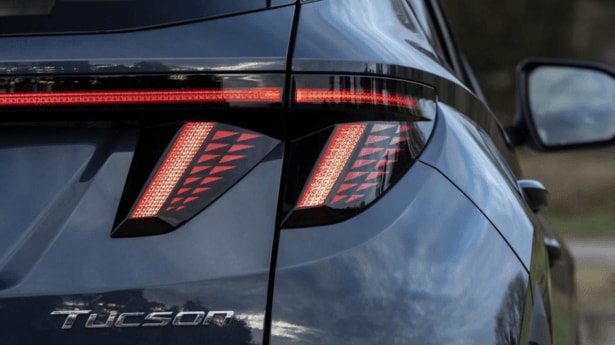
The daily drive along Bethel Road or North High Street into Columbus demands an SUV that balances modern efficiency with all-weather confidence. As hybrid technology moves from a niche option to the standard for daily travel, local buyers are increasingly comparing the latest entries in the compact crossover segment. The updated Tucson Hybrid has quickly emerged as a standout option, combining an advanced electrified powertrain with standard HTRAC all-wheel-drive capability to handle central Ohio's changing seasonal conditions.
At Great Lakes Hyundai of Columbus, we see firsthand how drivers evaluate these vehicles on our local roads. Many first-time hybrid shoppers test-driving the Tucson Hybrid ask how the transition between gas and electric power feels during stop-and-go traffic before they even look at the cabin technology. The system uses a conventional transmission rather than a continuously variable setup, delivering a traditional, geared driving feel that feels familiar and responsive.
If you are ready to experience this refined hybrid performance yourself, you can visit our showroom at 2900 Morse Rd to take a test drive. You can also reach our sales team directly at (614) 714-5530 to discuss current model availability and schedule your visit.
Comparing Hybrid Value: 2026 Hyundai Tucson Hybrid vs. Toyota RAV4 Hybrid Pricing
Acquiring a modern hybrid crossover should not require paying a massive premium for standard features. When comparing the overall value of the Tucson Hybrid against the Toyota RAV4 Hybrid, the pricing structure reveals a compelling advantage for the Hyundai lineup. The entry-level Tucson Hybrid Blue SE starts at a base MSRP of $32,450 before a $1,600 destination charge, offering standard all-wheel drive and a comprehensive suite of active safety tech.
Stepping up through the trim levels allows buyers to balance their budget with desired premium features. The well-equipped SEL trim carries a base MSRP of $32,400 with a $1,600 destination charge, while adding the popular SEL Convenience package brings the base MSRP to $34,900 plus a $1,600 destination charge. For those seeking the pinnacle of comfort and technology, the top-tier Limited trim starts at a base MSRP of $42,075 with a $1,600 destination charge. In contrast, a comparable Toyota RAV4 Hybrid Limited often pushes past this price point, making the Tucson Hybrid a highly competitive choice for value-focused buyers.
Pricing
Pricing by trim
| Feature | Blue SE | Limited | SEL | SEL Convenience |
|---|---|---|---|---|
| Base MSRP | $32,450 | $42,075 | $32,400 | $34,900 |
| Destination charge | $1,600 | $1,600 | $1,600 | $1,600 |
Engine & Performance
Powertrain specs by trim
| Feature | Blue SE | Limited | SEL | SEL Convenience |
|---|---|---|---|---|
| Engine | 1.6L | 1.6L | 1.6L | 1.6L |
| Horsepower | 231 hp | 231 hp | 231 hp | 231 hp |
| Torque | 271 lb-ft | 271 lb-ft | 271 lb-ft | 271 lb-ft |
| Transmission | 6-speed automatic | 6-speed automatic | 6-speed automatic | 6-speed automatic |
| Drivetrain | All-wheel drive | All-wheel drive | All-wheel drive | All-wheel drive |
Cabin Space and Practicality: How the Tucson Hybrid Outstretches the RAV4 Hybrid
Interior dimensions reveal a clear design advantage for the Tucson Hybrid, which is built on a wheelbase of nearly 109 inches. This extended footprint translates directly into a highly spacious cabin that outclasses the Toyota RAV4 Hybrid in almost every major dimension. Passengers in the Tucson Hybrid enjoy a generous allocation of space, including about 108 cubic feet of passenger volume and about 41 inches of rear-seat legroom. By comparison, the Toyota RAV4 Hybrid provides a tighter rear cabin with about 99 cubic feet of passenger volume and only about 38 inches of rear legroom, a difference that taller adults will immediately notice on longer journeys.
Practical utility is another area where the Tucson Hybrid excels. Behind the second row of seats, you will find about 39 cubic feet of cargo space, which easily expands to a maximum of about 80 cubic feet when the rear seats are folded flat. The Toyota RAV4 Hybrid offers slightly less everyday room, providing about 38 cubic feet of cargo space behind the second row and topping out at about 70 cubic feet of maximum cargo capacity with the seats folded.
The physical act of loading cargo is also more straightforward in the Tucson Hybrid, thanks to a wider rear door opening and a lower liftover height. If you want to see how these generous dimensions accommodate your daily cargo needs, you can browse our new Hyundai inventory online to find the exact configuration that fits your lifestyle.
Advanced Cabin Tech and Everyday Comfort: Screen Layouts and Climate Control
The contrast between the dashboard layouts of these two hybrid crossovers highlights two very different approaches to modern cabin design. The Tucson Hybrid features a clean, horizontal dashboard layout anchored by a standard 12.3-inch touchscreen display that supports wireless Apple CarPlay and Android Auto across all trim levels. On upper trims, this screen is seamlessly paired with an adjacent 12.3-inch digital instrument cluster, creating a continuous curved housing that gives the interior an upscale, high-tech atmosphere. The Toyota RAV4 Hybrid uses a more traditional, upright screen design, featuring a standard 10.5-inch display or an available 12.9-inch unit on its highest trims.
Comfort features are equally represented in the Hyundai cabin, ensuring a pleasant environment during seasonal temperature swings. A standard dual-zone automatic climate control system is included on all hybrid trims, allowing the driver and front passenger to set individual temperature preferences. Hyundai also equips the Tucson Hybrid with physical buttons and knobs for quick adjustments to the climate and volume controls, addressing a common complaint among modern car buyers who prefer tactile feedback over purely screen-based menus.
Getting behind the wheel of a tech-forward hybrid is simple with our convenient online shopping tools. You can choose to pre-qualify in minutes online with no impact to your credit score, or when you are ready to finalize your purchase, you can submit a secure online finance application to expedite your visit to our dealership.
On the Road: Which Hybrid SUV Delivers a Smoother Ride and Better Clearance?
For those loading up gear for a weekend trip to Alum Creek State Park in Westerville, the driving dynamics and physical capabilities of a hybrid SUV are just as important as its interior space. Every 2026 Tucson Hybrid comes equipped with a highly responsive powertrain consisting of a 1.6L turbocharged four-cylinder engine paired with an electric motor. This setup produces a combined 231 hp and 271 lb-ft of torque, sent through a traditional 6-speed automatic transmission. Standard mechanical All-wheel drive ensures confident traction across changing road surfaces, while the traditional geared transmission avoids the high-rpm drone often associated with the electronically controlled continuously variable transmission used by the RAV4 Hybrid.
Ride quality is further enhanced by the Tucson Hybrid's sophisticated suspension tuning, which is designed to absorb pavement imperfections while maintaining body composure through tight corners. The vehicle also offers practical advantages when navigating rougher terrain or unpaved park paths. With more than 8 inches of ground clearance, the Tucson Hybrid sits slightly higher than the standard Toyota RAV4 Hybrid, which offers about 8 inches of ground clearance on its standard hybrid trims. This extra clearance provides added protection against obstacles, making the Tucson Hybrid a highly capable companion for both daily commutes and outdoor recreation.
Industry-Leading Protection: Comparing the Hyundai and Toyota Hybrid Warranties
Long-term ownership security is heavily influenced by the manufacturer protection plan that backs your vehicle. Hyundai is famous for offering Premium Warranty, and the Tucson Hybrid is no exception. Every new model comes standard with an industry-leading 10-year/100,000-mile powertrain warranty alongside a matching 10-year/100,000-mile hybrid battery warranty. This comprehensive coverage is paired with a 5-year/60,000-mile new-vehicle limited warranty, offering peace of mind during your first years of ownership.
Toyota's warranty coverage for the RAV4 Hybrid differs in duration and coverage terms. The Toyota powertrain warranty lasts for five years or 60,000 miles, and its basic bumper-to-bumper warranty expires after three years or 36,000 miles. While Toyota does provide a ten-year battery warranty, the rest of the hybrid system components are only protected for eight years or 100,000 miles. By choosing the Tucson Hybrid, buyers secure double the powertrain protection and a much longer window of bumper-to-bumper peace of mind, reinforcing the Hyundai model's superior long-term value proposition.
Common Questions About the Tucson Hybrid and RAV4 Hybrid Comparison
Q: Does the 2026 Hyundai Tucson Hybrid require a 240-volt home charging station?
No, the standard Tucson Hybrid is a self-charging hybrid that does not plug in. The battery is replenished automatically through regenerative braking and the onboard gasoline engine, meaning you do not need any special electrical outlets or charging equipment at home.
Q: What is the maximum towing capacity of the 2026 Hyundai Tucson Hybrid?
When properly equipped with trailer brakes, the Tucson Hybrid can tow up to 2,000 pounds. This capacity is highly practical for hauling light utility trailers, dirt bikes, or small teardrop campers for weekend getaways.
Q: How does Hyundai Roadside Assistance support Tucson Hybrid owners in an emergency?
Every new Tucson Hybrid includes 5 years of complimentary coverage with 24-hour manufacturer-backed support. In the event of a flat tire, dead battery, or mechanical breakdown, you can reach out directly via Hyundai Roadside Assistance: 800-243-7766 to coordinate towing to the nearest authorized Hyundai service center.
Q: Are heated seats standard on the Tucson Hybrid?
Heated front seats are standard starting on the SEL trim and above. For families seeking maximum passenger comfort during cold central Ohio winters, the SEL Convenience trim adds heated rear seats as well.
Q: Can I use a digital smartphone key with the Tucson Hybrid?
Yes, Hyundai's digital key technology is available on upper trims, allowing you to lock, unlock, and start your vehicle using a compatible smartphone. This feature also lets you securely share digital access keys with family members without needing a physical key fob.
Prices and MSRP referenced in this article are estimates for informational purposes only and do not constitute an offer to sell. See dealer for complete details. Fuel economy estimates shown may differ from official EPA ratings and should not be relied upon as a guarantee of actual vehicle performance.