

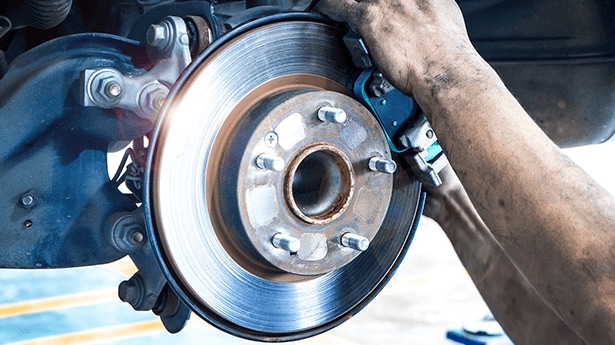
An unexpected change in how your vehicle slows down is often the first indicator that your braking system requires professional attention. When pressing the brake pedal, the mechanical components of your vehicle work under intense heat and friction to bring thousands of pounds to a safe stop. Over time, friction materials naturally wear down, leading to distinct physical and auditory warnings that should never be ignored. Identifying these symptoms early can prevent minor component wear from escalating into a complex, costly repair.
A high-pitched squealing or squeaking sound when applying pressure to the pedal is one of the most common warnings. This noise is typically produced by a small metal wear indicator built into the brake pad, designed to scrape against the rotor when the friction material has worn down to a critical thickness. If this warning is overlooked, the friction material can wear away completely, leading to a harsh, metallic grinding sound. This grinding indicates that the steel backing plate of the pad is making direct contact with the brake rotor, which quickly scores the rotor surface and severely compromises your stopping power.
Physical sensations through the steering wheel or brake pedal also point to system wear. A distinct vibration, pulsing, or shaking during deceleration typically indicates that the brake rotors have developed thickness variations or hot spots, preventing the pads from making smooth, flat contact. Furthermore, if your vehicle pulls to one side when braking, it could signal a stuck caliper piston or a collapsed brake hose, which causes uneven braking pressure across the axle.
If you notice any of these warning signs while driving near the Olentangy River or commuting along North High Street, addressing them immediately is vital for your safety. Drivers in Columbus can easily find our service center by looking up directions to our Morse Road facility. For immediate assistance or to discuss your vehicle's symptoms with a service advisor, feel free to give us a quick call. To secure a diagnostic appointment at your convenience, you can access our online service scheduler. If you are planning broader maintenance or wish to explore ownership options, you can also prequalify online to streamline your upcoming visit.
Early Indicators of Brake Wear on 2026 Hyundai Models
Modern vehicles feature highly integrated safety systems where mechanical braking components work directly with advanced electronics. On newer models, such as the 2026 Hyundai Tucson SEL Convenience, the braking system is closely tied to driver-assist technologies. This model comes equipped with a power-assisted four-wheel disc brake setup, utilizing ventilated front discs with single-piston floating calipers and solid rear discs. It also features standard Electronic Brakeforce Distribution, which dynamically modulates braking pressure to each wheel to maximize stability. Because systems like Forward Collision-Avoidance Assist rely on absolute mechanical precision to function correctly, keeping your brakes in top condition is more critical than ever.
Beyond physical noises, your vehicle's dashboard lights provide clear diagnostic warnings. An illuminated brake warning light or an active check-engine light can indicate a drop in system pressure or a low fluid level. Checking the brake fluid reservoir under the hood is a straightforward way to assess system health. Healthy fluid should be clear with a light yellow or amber tint. If the fluid appears dark brown or black, it has become contaminated with moisture and debris, which lowers its boiling point and can cause a spongy, soft pedal feel under heavy use.
The physical thickness of the brake pads is another direct indicator of wear. The standard minimum safe thickness for Hyundai brake pad lining is 2 millimeters (approximately 0.08 inches). Any measurement at or below this threshold requires immediate replacement to ensure safe stopping distances. Visual inspections through the spokes of your wheels can often reveal how much friction material remains before the metal backing plate is exposed.
When replacing worn components, utilizing factory-spec parts is essential to maintain the performance of your vehicle's safety systems. Our specialized parts center stocks original equipment manufacturer components designed specifically for your model's weight and caliper specifications. Using matching parts ensures that advanced driver-assist systems calibrate correctly and perform reliably during emergency stops.
Understanding the Recommended Hyundai Brake Service Intervals
Brake wear is highly dependent on driving habits, vehicle weight, and local environmental conditions. For instance, a heavier three-row SUV like the 2026 Hyundai Santa Fe XRT, which carries a curb weight of 4,343 lbs and features a towing capacity of 3,500 lbs, puts a higher thermal load on its braking components than a compact sedan. Frequent towing or carrying a full load of passengers increases the kinetic energy that the front-wheel drive braking system must dissipate, accelerating pad and rotor wear.
To maintain optimal safety, routine inspections should be performed during every scheduled maintenance visit, which typically occurs every 7,500 to 8,000 miles or at least once a year. During these checks, technicians measure pad thickness, inspect the rotors for heat damage or scoring, and verify that the calipers slide freely. While actual replacement intervals for brake pads typically fall between 30,000 and 70,000 miles, stop-and-go city driving will naturally wear components down faster than consistent highway travel.
Environmental factors in the local region also play a significant role in brake longevity. Because central Ohio is located in a heavy salt-belt zone, winter road-salt use can accelerate corrosion on the back of the brake rotors and around the caliper slide pins. This rust buildup can cause the brake pads to stick in their brackets, leading to premature, uneven wear or a constant drag on the rotor. Regular undercarriage washes and annual brake cleaning and lubrication services are highly recommended to prevent salt-induced binding.
Choosing the Right Brake Pads: Ceramic versus Semi-Metallic for Your Hyundai
Selecting the correct friction material during a brake replacement is key to achieving the right balance of stopping power, noise control, and component longevity. The two primary options available for modern vehicles are ceramic and semi-metallic brake pads, each offering distinct physical characteristics suited to different driving demands.
- Ceramic Brake Pads: Composed of a dense ceramic material mixed with copper fibers, these pads are engineered for quiet operation, minimal dust production, and exceptional durability. They perform highly consistently across a wide range of temperatures and are gentle on brake rotors. This makes them the ideal choice for daily commuting in passenger cars and crossover SUVs, where ride comfort and low maintenance are priorities.
- Semi-Metallic Brake Pads: These pads contain a high percentage of metal fibers, such as steel, iron, or copper, molded with synthetic resins. The metallic composition provides superior heat dissipation and high-friction cold bite, making them highly effective for heavy vehicles, performance driving, or frequent towing. However, they tend to generate more black brake dust, can be noisier during engagement, and typically wear down rotors faster than ceramic alternatives.
For most daily drivers, ceramic pads offer the quietest and cleanest performance. However, if you frequently utilize the maximum towing capacity of a larger SUV, semi-metallic pads may be recommended to handle the extreme thermal loads generated when stopping heavy loads on downhill descents.
Answers to Common Questions About Hyundai Brake Maintenance
Q: What is the difference between a brake pad replacement and a brake fluid flush?
A: A brake pad replacement is a mechanical service where worn friction pads are exchanged for new ones to restore stopping power. A brake fluid flush is a fluid maintenance service where old, moisture-contaminated hydraulic fluid is purged from the lines and replaced with fresh fluid to maintain proper pedal pressure and prevent internal corrosion.
Q: Why does my brake pedal feel soft or spongy when I press it?
A: A spongy pedal feel typically indicates that air has entered the hydraulic brake lines, or that the brake fluid has absorbed excessive moisture and degraded. Because air compresses much more easily than liquid, this condition prevents the hydraulic system from applying full pressure to the calipers, requiring immediate professional bleeding or flushing.
Q: Is it necessary to resurface or replace the rotors every time the pads are changed?
A: Yes, rotors should always be either resurfaced or replaced during a pad change to ensure a perfectly flat, clean mating surface for the new pads. Installing new pads on a worn, uneven, or glazed rotor can lead to immediate squealing, pedal pulsation, and significantly reduced pad life.
Q: How does winter road salt affect my vehicle's braking components?
A: Road salt accelerates the formation of rust on iron brake rotors and can cause caliper slide pins to seize. When slide pins stick, the caliper cannot apply or release pressure evenly, which often results in rapid, uneven pad wear, reduced fuel efficiency, and pulling to one side.
Q: How can I check the brake fluid level myself?
A: Locate the semi-transparent brake fluid reservoir under the hood, typically positioned on the driver's side near the firewall. Without removing the cap—which can introduce moisture and dirt—verify that the fluid level rests clearly between the molded minimum and maximum fill lines on the side of the plastic container.
Expert Brake Care and Professional Support at Great Lakes Hyundai
Maintaining your vehicle's stopping power requires specialized diagnostic equipment and trained hands. At Great Lakes Hyundai of Columbus, our team of factory-certified technicians understands the exact engineering specifications of your vehicle's braking system, from traditional mechanical calipers to advanced electronic brake distribution modules. We use specialized diagnostic tools to measure component wear precisely, ensuring your vehicle remains safe and reliable on every journey.
For drivers navigating the daily commute from Gahanna, keeping your braking system in prime condition is essential for managing busy highway traffic and sudden stops. Our service team is fully equipped to handle everything from routine inspections and fluid flushes to complete rotor replacements. We exclusively use high-quality parts that match your vehicle's original factory standard and ensure your safety systems perform exactly as intended.
Beyond brake maintenance, we are committed to supporting all of your automotive needs. If you are considering upgrading your vehicle or simply want to sell your current car, we can help. Through our partnership with Edmunds, you can easily value your trade-in online with no pressure to purchase from us. Your cash offer is valid for seven days, and we can provide current details when you are ready.
To experience our professional service firsthand, we invite you to contact us today. You can easily find our service center by getting directions to our Columbus location on Morse Road. For quick questions about brake symptoms or to coordinate your visit, please call our service department directly at (614) 714-5530. At Great Lakes Hyundai, the Savings are So Good!
Prices and MSRP referenced in this article are estimates for informational purposes only and do not constitute an offer to sell. See dealer for complete details. Fuel economy estimates shown may differ from official EPA ratings and should not be relied upon as a guarantee of actual vehicle performance.
Categories:
News